Ditishimega Projects builds City of Tshwane’s first precast-concrete reservoir

Corestruc constructs solid foundations in water infrastructure market
August 6, 2025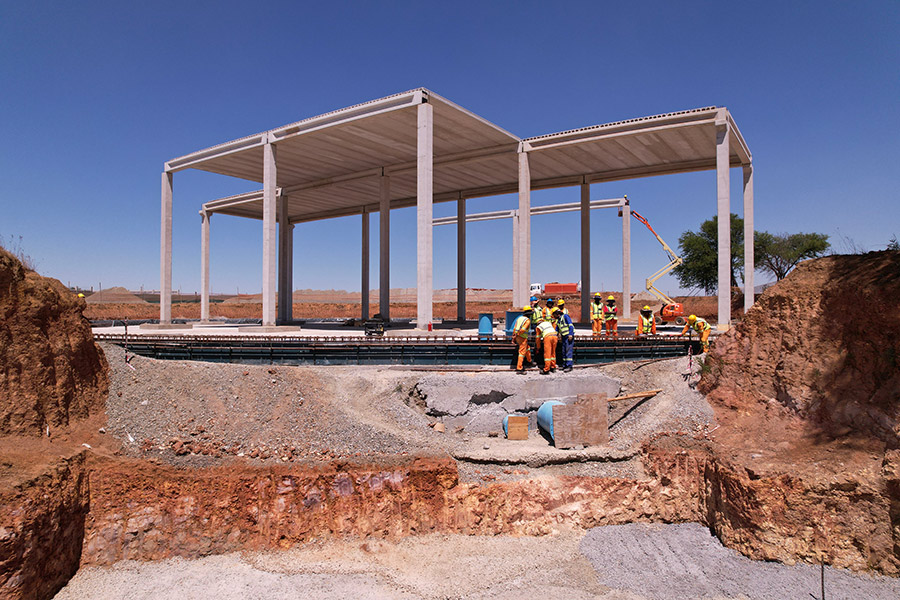
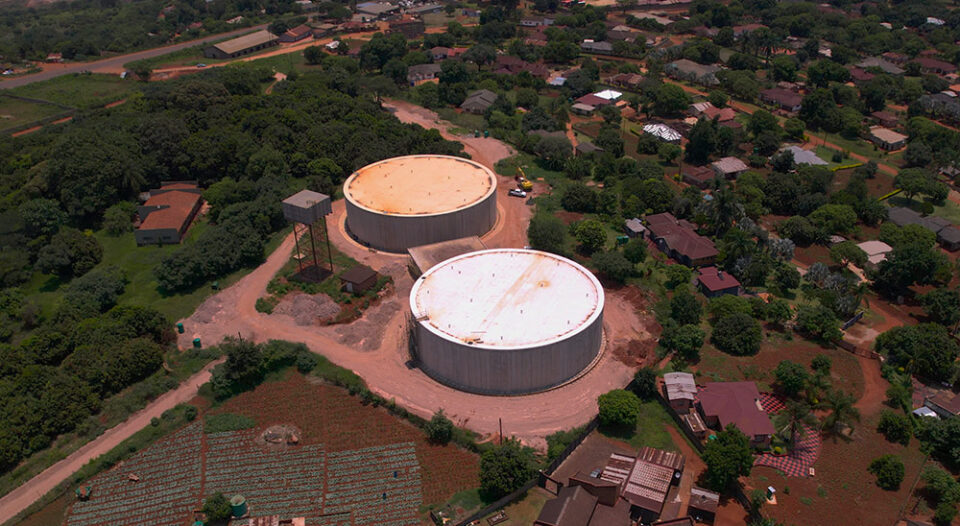
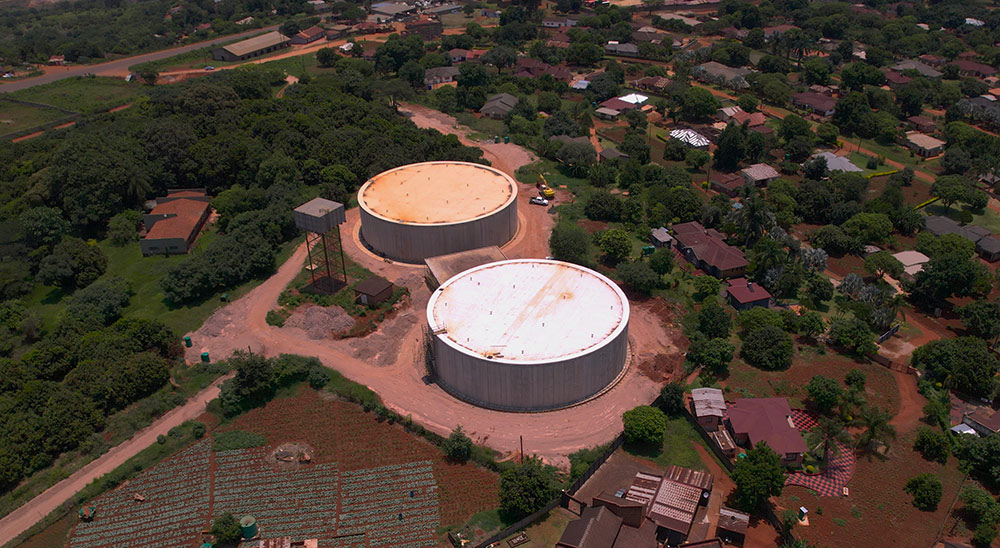
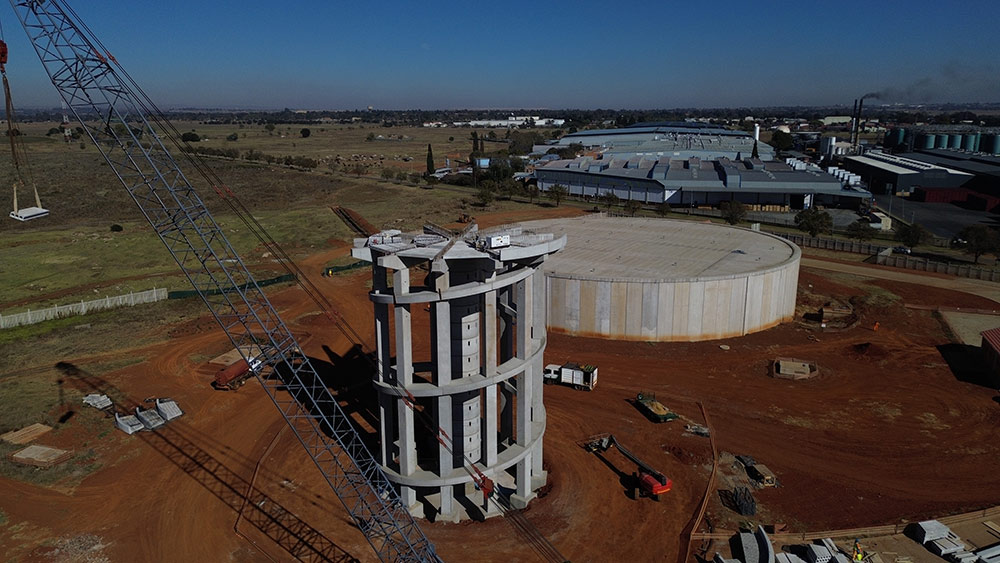
Ditshimega Projects has partnered with Corestruc to fast-track the construction of a 20ML reservoir in Winterveld, located on the north-western corner of the City of Tshwane Metropolitan Municipality (City of Tshwane).
Situated in Winterveld Extension 3 and 4, the reservoir is part of a large water supply project, including a 11km water reticulation system, that is being constructed in this growing node which has a population of more 120 000 people. In addition, Ditshimega Projects has been engaged to build a 10km bulk sewer line in the area to also provide this community with access to quality sanitation. To date, many households in this community have had to use pit latrines because they are not connected to water and sanitation systems.
Ditshimega Projects has already constructed many reservoirs throughout the country for municipalities. However, this time around, the company will not use cast-in-place methods. Instead, it has opted for precast concrete, which has proved to be a significantly faster method of building these complex structures, saving other municipalities, water service authorities and industries in construction time and costs. This development will also make the City of Tshwane the latest metropolitan municipality to harness the many benefits of Corestruc’s system.
Moses Baloyi, a seasoned Ditshimega Projects’ Civil Engineering Technologist, introduced this method of constructing reservoirs to the City of Johannesburg and its consulting engineering team Bahlaphing Consulting.
“Considering our strong focus on water and sanitation infrastructure, Ditshimega Projects has kept a very close eye on Corestruc’s technology especially with regards to its ability to accelerate the construction of large water-retaining structures in another metropolitan municipality. We must ensure that we are always at the cutting-edge of concrete design and application, with Corestruc’s award-winning technology having proved time-and-time again to be a ‘game-changer’. Our involvement in upgrading water infrastructure in Winterveld as the principal contractor provided the ideal opportunity to familiarise ourselves with the technology so that we stay ahead of the innovation curve,” Baloyi says.
Ditshimega Projects’ consulting engineering arm also evaluated the system and deemed it suitable for this project. It is also proposing building another large reservoir in the city with this system.
Baloyi, himself, has overseen the construction of many reservoirs throughout his successful career as a Civil Engineering Technologist and over the past eight years as a Ditshimega Projects’ Contracts Manager. This is knowledge that has placed him in very good stead on this project.
He notes that this method has already shown to be significantly faster than in-situ construction. The inner-portion of the large roof structure, consisting of prefabricated columns, beams and hollow-core slabs, as well as the in-situ concrete slab has already been completed. Ditshimega Projects is currently constructing the ring beam that supports the wall panels.
“Members of the Winterveld community are excited to see their reservoir being constructed so quickly especially considering that this project was delayed in 2016 due to a lack of funding,” he says.
Using cast-in-place methods, the reservoir roof can only be constructed once the wall and columns have reached their final height. The process also entails installing tons of propping inside the structure to support the formwork for the roof and concrete slab while it cures. This is not to mention the time spent on steel fixing and shuttering at height.
“We started manufacturing the roof during earthworks and site-terracing so that the various precast-concrete elements were ready to be dispatched once the in-situ column bases were completed. Including the roof, floor slab and column bases, multiple trades were, therefore, working simultaneously. This is how we are able to shave months off the production schedule whereas the traditional approach only allows for one trade to work at a time, starting with the floor slab and thereafter the wall and columns, before work can start on the roof. There is very little scope for error as delays in any one of the components will impact on the next, bearing in mind that the roof is usually the most complex and time-consuming aspect and, therefore, needs to be planned very carefully,” he says.
The dowels that protrude from precast-concrete columns for the roof are connected to the hold-down bolts in the column bases. Thereafter, the suspended prefabricated beams are connected to the dowels protruding from the columns. Hollow-core slabs are then coupled to stirrups cast into the beams. By placing steel reinforcing inside the voids of the hollow-core slabs and then filling them with in-situ concrete, the stirrups act as mechanical interlocks. Considering the efficiency of Corestruc’s process, its precast-concrete roof design is often also incorporated into cast-in-place reservoir construction projects. The floor and wall are constructed conventionally and the roof with precast concrete, saving months in construction time.
High tolerances are maintained throughout integration due to Corestruc’s expert rigging services, as well as precise design and manufacture of the various precast-concrete elements.
“As part of the socio-economic and enterprise development target of the contract, we’ve also ensured that members of the community are employed to work alongside Corestruc when integrating the precast-concrete elements. This is opposed to only participating in the construction of the water reticulation system and the sewer line, as well as the floor slab, ring beam and ancillary works associated with the reservoir. When this project is completed, we want the community to have also gained experience in specialist trades, such as rigging which is used across so many different industries and, therefore, highly employable skill,” Baloyi says.
These individuals will also have the opportunity to gain further knowledge while assisting Corestruc and Ditshimega Projects integrate the wall panels and prepare for post-tensioning.
“Considering the progress made thus far, I am very confident that we will be able to complete the structure in four months, with minor challenges encountered thus far,” he says, adding that once the panels have been integrated and the wall post tensioned, the outer portion of the roof will be completed. A grout topping is then placed over the hollow-core slabs to form a monolithic structure and a precast concrete coping installed around the perimeter of the roof.
Having successfully supervised the in-situ construction of many reservoirs, he says that building water-tight concrete structures is a complex process that is fraught with many challenges.
“It requires meticulous site practice, and this takes time, while also navigating the many variables encountered on the work site,” Baloyi says. “To avoid honeycombing that prevent a strong, water-tight bond between the two layers in the reservoir wall, sound compaction and placement of concrete in the formwork are required. Concrete pumping into deep forms must also be carefully managed to ensure consistent natural packing density is not interrupted by shutters as this can result in porosity at the top and bottom of the wall,” he says.
Other important considerations include ensuring adequate cover; retaining grout between the adjacent shutters; and the correct installation of hydrophilic waterstops and bearing pads, which play a critical role in transferring loads to the foundation and facilitate movement. “This may seem obvious, but these problems are still being encountered on reservoirs to this very day which is a significant waste of limited municipal resources,” Baloyi says.
By prefabricating the wall in a factory, Corestruc’s system successfully addresses all of these
For example, curing is always undertaken in ideal conditions to ensure each, and every prefabricated element achieves its maximum potential strength. Using sophisticated mixing techniques, less permeable, denser and stronger concrete is attainable. The use of chemical additives in correct dosages also ensures a more resistant concrete that can withstand deleterious agents such as carbon, chlorides and sulphate attack. Considering that these elements are also manufactured at ground level, precast concrete can also be a safer option.
He explains that the first wall panel is supported on the ring beam by a push and pull prop. Steel brackets hold the panels together and the completed wall then braced back to the roof structure for temporary support, eliminating the need for installation of extensive propping.
Unbonded cables are pushed through the polyvinyl sleeves in the panels and grouted monolithically with panel joints.
A high-strength and flow grout with an extended pot life is then poured continuously in between the wall panels and horizontal cable sleeves.
When the grout has cured to 80MPa, the cables are stressed via four precast-concrete buttress panels spaced along the reservoir perimeter.
The wall is then pinned by casting a 200mm to 250mm-high reinforced kicker on both sides of each panel and the joints between the panels grouted with a high-flow and strength grout. Post-tensioning renders the panels in compression to achieve water tightness.
“Corestruc uses a “slide-and-pinned” system. Post-tensioning is undertaken when the wall is not yet fixed to the ring footing and it is, therefore, allowed to slide on a steel bearing or locating plates. The coated post-tensioned cables are not bonded to the grout with the reservoir designed to maintain a residual compression of a minimum of 1MPa in all directions. Horizontal reactions to the wall base are transferred to the ring foundation through the second phase cast in-situ kicker. This is where the ring tension in the base is also activated to resist the reaction. Additional post-tensioning of the lower part of the wall reduces the amount of rebar required in the cast in-situ ring footing,” he concludes.