Corestruc constructs solid foundations in water infrastructure market

Precast Concrete Revolutionises Water Infrastructure Delivery
June 23, 2025
Ditishimega Projects builds City of Tshwane’s first precast-concrete reservoir
November 14, 2025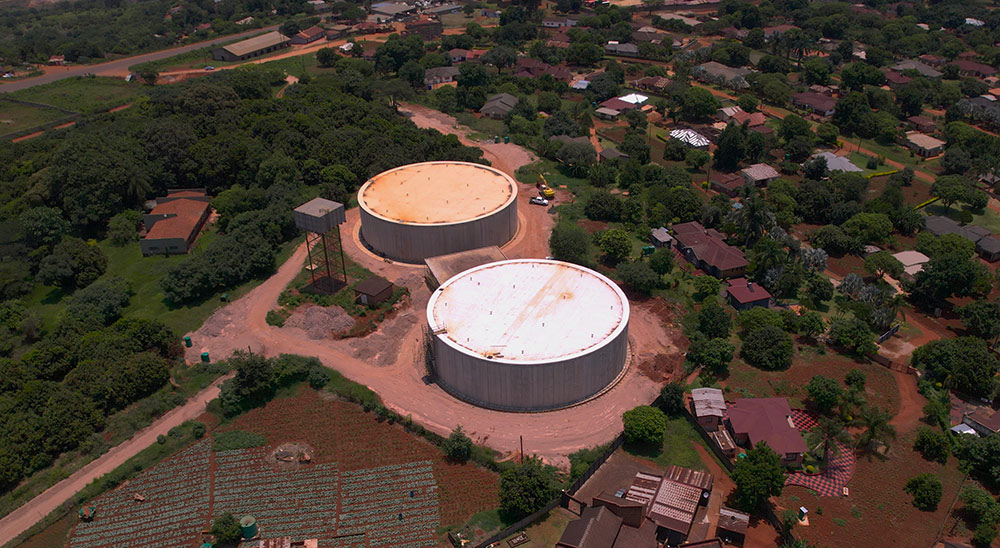
Having already successfully delivered about 600ML of water-storage capacity throughout the country over a very short period, Corestruc has not only grown a formidable presence in the water infrastructure market. The company has also brought the role that precast concrete technology can play in streamlining the delivery of quality water supply infrastructure to the fore.
For many municipalities, water service authorities and water-intensive industries, including mines, constructing entire reservoirs and water towers with high quality prefabricated concrete elements is a given. This is considering the technology’s proven track record in accelerating the construction of this complex infrastructure. Using cast-in-place methods, there is very little scope for error. To achieve durable and liquid-retaining structures, a suitable design must be well executed during construction and according to exacting specifications. It is also an extremely lengthy process.
Using Corestruc’s method, reservoirs, ranging in size from 200kl to 50ML, have been built in a fraction of the time. In turn, this has helped to fast-track access to an essential service and basic human right enshrined in the South African Constitution.
This while also providing municipalities with a more affordable reservoir construction solution. Significant cost savings are also achieved over the long lifecycle of these structures, which feature denser, stronger and more resistant concrete elements. This is the outcome of high standards of quality control in the worldclass factories where they are manufactured. For example, controlled curing processes ensure that concrete sets under the ideal conditions to maximise the strength of the elements. They are also stress-tested before they are dispatched to site and inspected again before they are integrated. This process also eliminates unknowns that influence the quality of cast-in-place concrete such as temperature, humidity and inaccurate tools. It is a fact that many reinforced concrete structures are requiring major repairs very early on in their useable lives. In many instances, this can be attributed to shoddy workmanship. This increases total cost of ownership and places an additional financial burden on stretched municipalities which are already struggling to keep pace with maintenance requirements.
District municipalities take the lead
The potential role that precast concrete could play in streamlining water-storage capacity was first identified by Thembisile Hani Local Municipality (THLM) and its professional teams. Working alongside Corestruc, it helped to refine and set the standard in precast concrete reservoir design and construction. This paved the way forward for more district municipalities to innovate in the field.
THLM accelerated the construction of two 10ML reservoirs in its jurisdiction. One of these was part of the Bundu Water Augmentation Scheme, the largest infrastructure project to be undertaken by municipality, to date.
It is, therefore, regarded as a flagship structure by the municipality. This is especially considering that it received a 100% score in the Department of Water & Sanitation’s 2023 Blue Drop report. Following almost five years of operation at the time, the report noted that the reservoir was leak-free and in a very good condition.
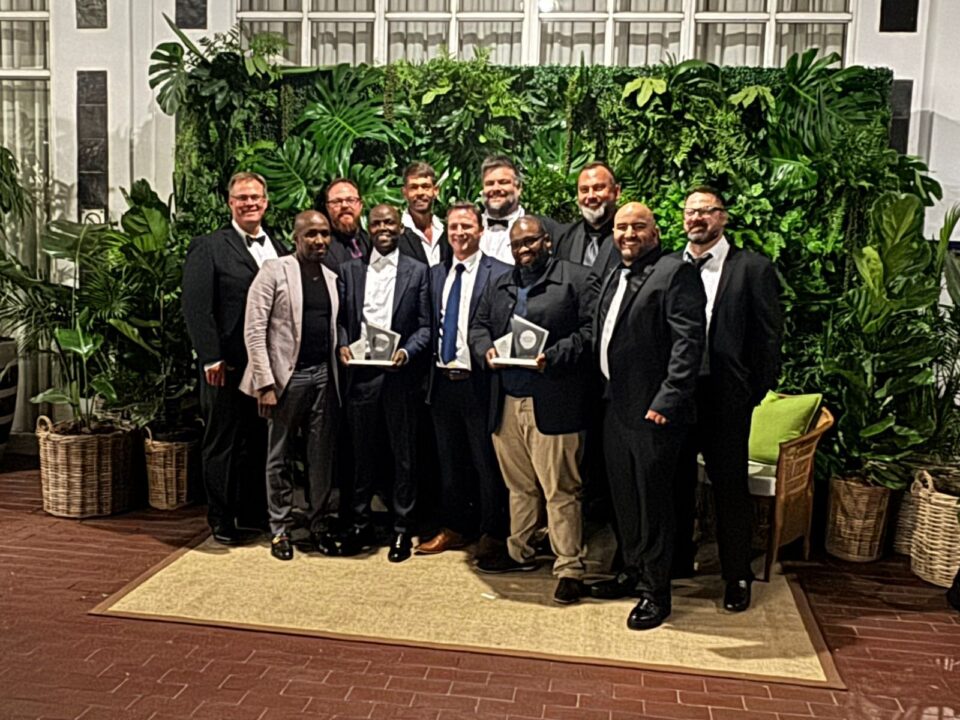
Partnering with Corestruc, Vhembe District Municipality (VDM) also built two 10ML precast concrete reservoirs to help alleviate severe water shortages in its jurisdiction. Again, significant construction time and cost savings were achieved. Each reservoir was completed in only four months. It would have taken about nine months to build a similar-sized water-retaining structure with in-situ construction methods. This impressive feat earned the project a prestigious Concrete Society of Southern Africa 2025 Fulton Award in the “Innovation and Invention” category.
By facilitating faster and more cost-effective reservoir construction, precast-concrete addresses two of the biggest hurdles that stifle construction of critical services delivery infrastructure in smaller outlying municipal jurisdictions. As a result, many communities have had to contend with erratic water supply for extended periods.
However, VDM and THLM are not the only municipalities that view this as an opportunity to find innovative solutions to unique challenges. Capricorn District Municipality, Steve Tshwete Local Municipality, Dr JS Moroka District Municipality, Nala Local Municipality, Setsoto Local Municipality, Polokwane Local Municipality and Thulamela Local Municipality have also engaged Corestruc to help accelerate reservoir construction.
In some instances, precast-concrete technologies have been deployed together with in-situ concrete methods to fast-track the construction of these structures. For example, Corestruc has built many reservoir roof structures, which are the most complex and time-consuming components of a conventional water-retaining structure construction project.
The large roof structure of the 50ML Krugersburg reservoir in Polokwane is stellar example of hybrid-concrete construction excellence. By incorporating a precast-concrete roof into the design, the build was fast-tracked to supply an influx of tourists to Polokwane during the FIFA Soccer World Cup.
Corestruc has also provided such solutions to Magalies Water, including for the 50ML Mafenya reservoir, which was highly commended by judges in the 2017 edition of the Fulton Awards.
The need for municipalities, especially those that face deep-rooted development obstacles, to challenge the norm was recently reiterated by Dr Nomalungelo Gina, Science, Technology and Innovation Deputy Minister.
“Innovation allows us to ‘leapfrog’ to better outcomes. New technologies disrupt the status quo, reduce costs and streamline processes, ultimately empowering citizens and restoring trust in local government,” she elaborated.
Metropolitan municipalities break boundaries
However, it is the metropolitan municipalities that are driving Corestruc to test perceived limitations of precast concrete so that they can ensure water security in their jurisdictions. Rapid urbanisation is placing significant strain on their existing supply capacity.
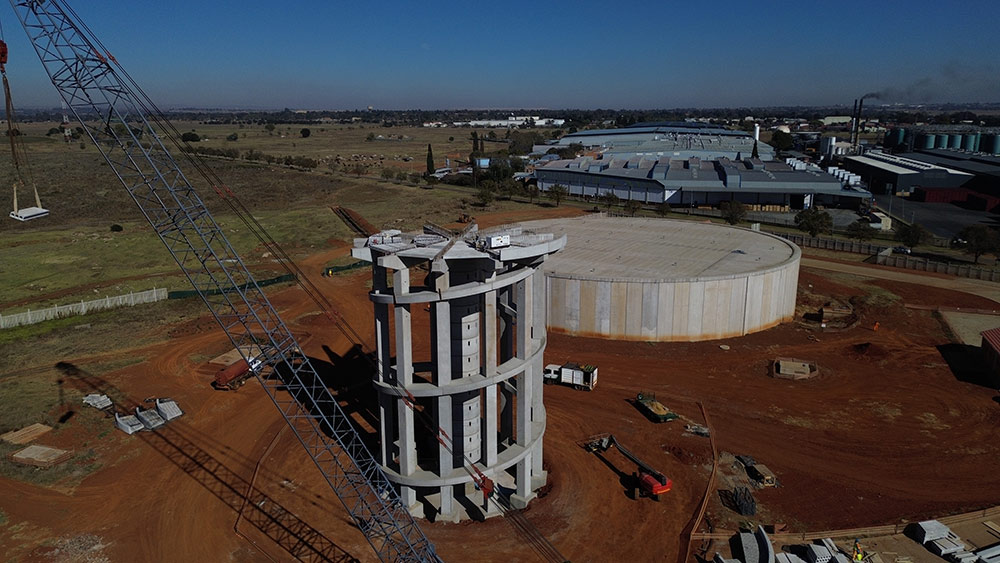
With the help of Corestruc, the City of Ekurhuleni Metropolitan Municipality (City of Ekurhuleni), for example, has constructed Africa’s first prefabricated concrete water tower. This project also deservedly won a 2025 Fulton Award in the “Infrastructure of up to R100-million category”. The panel of judges was impressed by the “exceptional quality of the precast concrete, as well as the speed at which this type of infrastructure can be provided with the associated cost savings.”
Working alongside Corestruc, the City’s Water & Sanitation Department has also built seven high quality precast concrete reservoirs ranging from 25ML to 30ML in size.
However, these projects have also helped to meet City of Ekurhuleni’s strategic socio-economic objectives.
Working alongside Corestruc as the main contractors, black-owned mid-tier construction companies have accumulated a wealth of knowledge and experience in large reservoir construction projects. Equipped with an intricate understanding of the system and Corestruc’s processes, they have a strategic competitive edge when tendering for more of these projects. Their value proposition is the ability to construct them faster and more cost-effectively.
RSMM Construction, Anita Building Construction, Mbako Project and Trading and Morawa Building & Civils have all made a name for themselves in the water-retaining structures market. This is at a time when municipalities are mustering available resources to address a growing backlog in water and sanitation infrastructure. An investment of around R70,4-billion a year is required to address water scarcity, alone.
Johannesburg Water, for example, is investing heavily in upgrading water infrastructure. Corestruc has also participated in these projects.
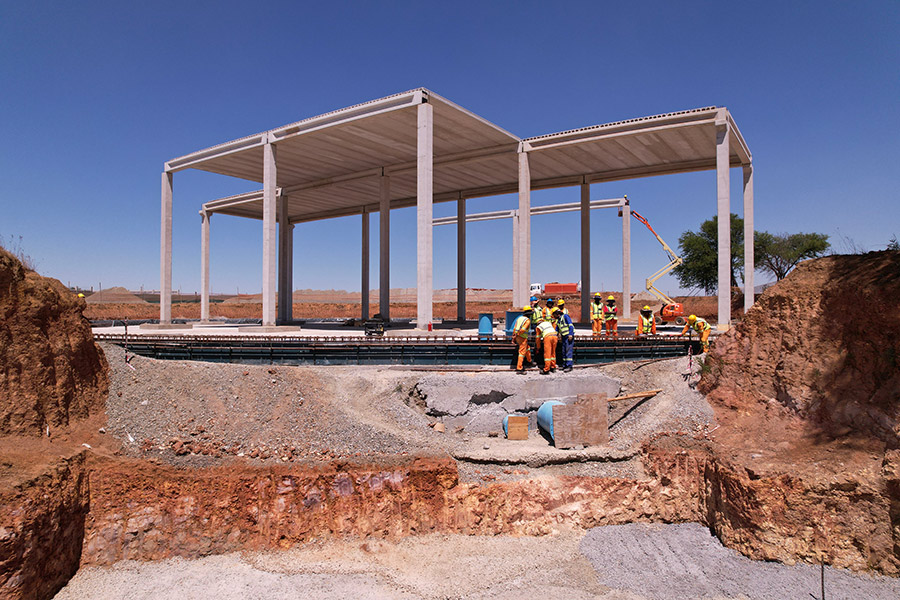
Meanwhile, the City of Tshwane Metropolitan Municipality is the latest large municipality to start building a precast-concrete reservoir. By fast-tracking the construction of 25ML of additional water storage capacity, the municipality will bring urgent relief to Winterveld. This rapidly expanding informal urban settlement has been grappling with severe water shortages.
A full order book
Similar to Corestruc’s other reservoirs, it consists of a precast-concrete roof and prefabricated “slide-and-pinned” wall system. Post-tensioning is undertaken when the wall is not yet fixed to the ring footing and it is, therefore, allowed to slide on a steel bearing or locating plates. The coated post-tensioned cables are not bonded to the grout with the reservoir designed to maintain a residual compression of a minimum of 1MPa in all directions. Horizontal reactions to the wall base are transferred to the ring foundation through the second phase cast in-situ kicker. This is where the ring tension in the base is also activated to resist the reaction. Additional post-tensioning of the lower part of the wall reduces the amount of reinforcing bar required in the cast-in-situ ring footing.
As part of the final aspects of the build, the concrete floor slab is completed and the hollow-core slabs that make up the outer portion of the roof structure connected to the precast-concrete beams. A grout topping is then placed over the hollow-core slabs to form a single monolithic structure and a precast-concrete coping installed around the perimeter of the roof as an aesthetic finish.
Meanwhile, Corestruc is also finalising the construction of the second precast-concrete water tower for the City of Ekurhuleni Metropolitan Municipality.
Located 34m above ground level and with a diameter of 18m, the tank has a capacity to store 3,5ML of water. It comprises precast-concrete wall panels and a prefabricated concrete roof structure, consisting of 150mm-thick hollow-core slabs supported by four internal precast-concrete columns and beams.
The structure’s columns were cast to individual lengths to fit between the spiral beam levels. In turn, the spiral beams were cast in segments to complete a 30o rotation for each beam. Besides the aesthetic value of the spiral beam, it provides critical lateral support to the columns. Cast in a “U”-shape, these precast-concrete elements were made continuous by installing site placed rebar and filling them to the brim with cast-in-place concrete. The structure’s columns were made continuous via cast-in threaded sockets and installing dowels into the receiving sleeves that were filled with non-shrink grout. Each node point was designed to withstand the prescribed lateral notional loads, as well as possible seismic action in combination with axial loads.
Continuity of the composite spiral beam was achieved by introducing cast-in female sockets to the bottom of each column below the cast in place concrete level. These sockets then received threaded dowels that spliced into the main rebar which was placed into the U-shape precast segment while still on ground level.
Supporting the centre of the tank and housing the stairs and pipes, the central shaft consists of individual precast-concrete rings, each about 1,6m in height. These rings are connected to each other via bespoke cast-in mechanical connectors, which also doubled as a line-up and levelling mechanism. The recess pockets for the components were closed with grout on site to protect against erosion.
Allowable maximum transport width determined the diameter of the central shaft. It was extremely challenging to fit the 600mm diameter and 500mm diameter inlet and outlet pipes, in addition to the access stairs inside.
On top of the columns, tapered precast-concrete beams connect the columns to the shaft at tank floor level, where hollow-core slabs were used as a permanent shutter to cast a 350mm-thick in-situ floor.
The tank floor beams were designed to support the weight of the precast slabs with the weight of the wet concrete while still in the virgin precast state. It was designed as composite with the cast-in-place floor to withstand service loads. The cantilever along the perimeter caused an enormous negative moment over the column positions. This was countered with sufficient top steel in the cast-in-place floor that formed the composite top flange of the beam.
High levels of accuracy were maintained in setting out the prefabricated concrete elements via co-ordinates. They were manufactured to exacting standards in Polokwane and transported to site where they were placed with a 150t hydraulic-crawler crane.
In addition to these projects, Corestruc is currently constructing a 3ML reservoir in Vondo and Vryburg, a 10ML reservoir in Paulpietersburg and 25ML reservoir in Klipvoor village.
“Across the country, reliable water access is just 64%. Therefore, water provision cannot be taken for granted, requiring continuous investments in infrastructure. At the same time, considering the extent of the challenge with which we grapple as a country, we need to ‘box smart’. This is by continuously finding ways to deliver higher quality services infrastructure in a more practical and cost-effective manner,” Willie de Jager, Managing Director of Corestruc, concludes.