
The full potential of precast-concrete technology yet to be tapped, specialist tells built-environment professionals

Kagiso Maleka joins Corestruc’s management team
June 7, 2023
Corestruc takes precast-concrete technology to new heights
April 11, 2024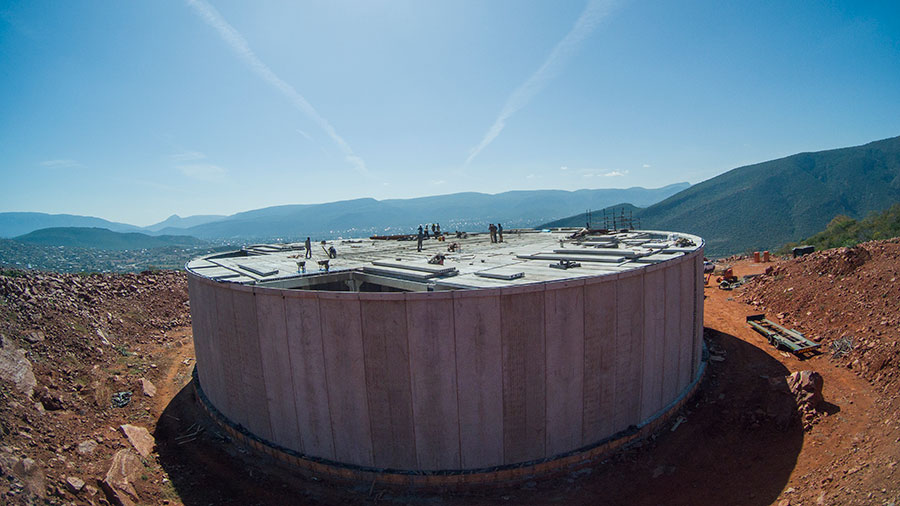
The real potential of precast concrete is yet to be fully harnessed in South Africa to significantly fast-track the construction of quality water infrastructure. However, with sound upfront planning of the execution of these construction projects, more quality prefabricated reservoirs, water towers and water and wastewater-treatment facilities could be built to alleviate the serious water and sanitation crisis.
So said Willie de Jager, Managing Director of Corestruc, during his sessions of the Cement & Concrete SA’s (CCSA’s) Concrete Working for Water Roadshow, which mobilised built-environment professionals across the concrete value chain to find solutions to the deepening water crisis.
“To successfully execute a large precast-concrete project requires sound upfront planning. Engineering designs and drawings, as well as the co-ordination of services need to be finalised before manufacture of the various precast-concrete elements can start. This requires input from all members of the professional team, including the project engineer, mechanical consultant, main contractor and the precast-concrete specialist. Bear in mind that there is very little scope for variations in the works programme once a precast-concrete construction project is underway. This is considering that the precast-concrete elements are manufactured to exacting specifications during the preliminary stages, such as earthworks, site terracing and foundation work,” De Jager said.
These projects also rely on extensive skills and experience across the entire precast-concrete value chain. This includes design, manufacture, transport and rigging capabilities to integrate the various prefabricated concrete elements that constitute the structure. He noted that each function had a critical role to play, and a weak link anywhere in the value chain would jeopardise the project. Corestruc’s systems have been set up specifically for the construction of reservoirs and water towers, among other structures. To do so, requires a sizeable capital investment, restricting many more participants from entering the market to help drive greater uptake of the technology.
Furthermore, there is a long lead time between the research and development phases and commercialisation of precast-concrete systems. For example, it took about four years for Corestruc to perfect its prefabricated concrete water towers, which are 35m in height and have a storage capacity of between 1,5ML and 5ML. The company is currently constructing two of these water towers.
They complement the many precast-concrete reservoirs and prefabricated roof structures for cast-in-place reservoirs that the company has already built for municipalities. It took the
contractor significantly longer to take this system to market. “Each time, it has been an extensive process of trial and error, returning from site to further refine the design and our processes until it works,” De Jager said.
However, the effort has been worth it. Already, Corestruc has helped to fast-track the construction of about 500ML of water-storage capacity, with many more reservoir projects already underway. This includes an open-top water-retaining tank with a wall height of 8,5m and total diameter of 41,71m for one of the country’s leading miners of platinum-group metals.
De Jager told concrete construction professionals at CCSA’s Concrete Working for Water Roadshow that the company had demonstrated that precast-concrete reservoirs were significantly faster to construct. For example, the company has built 10ML and 30ML reservoirs in four and six months, respectively.
He admitted; however, that concrete prefabrication may not always be much faster than traditional in-situ concrete construction. However, in these instances, precast concrete facilitated a sound project start. This is considering that the various precast-concrete elements that constitute the entire structure or sizeable portion thereof are already being manufactured during the earthworks, site terracing and construction of the foundations.
De Jager said that there were further benefits of precast concrete, not least of which are the high quality and durability of the final precast-concrete structure.
“The various precast-concrete elements that are integrated on site to complete the final structure are manufactured in controlled factory environments, ensuring consistent quality and reliability. The known durability traits of concrete are further enhanced with the use of high-strength concrete mixes; reinforcing or prestressed strand cover; and pre-tensioning,” he said.
Considering the sound upfront planning required for these projects, De Jager, said that precast-concrete construction also saved in variation costs.
Moreover, client bodies, engineers and contractors benefited from a reduction in construction material costs due to the use of high-strength concrete mixes and post-tensioning deployed in concrete prefabrication. For example, precast-concrete reservoirs were up to 40% lighter than those built using conventional cast-in-place methods, De Jager told cement and concrete industry stakeholders.
He added: “Prefabrication ensures a very high-quality final build at competitive rates. Taking all of these factors into consideration, the reservoirs that we’ve built have provided notable savings of between 10% and 30% savings in construction costs.”
By building durable water infrastructure, municipalities also save in maintenance costs over the 100-year design life of precast-concrete infrastructure.
De Jager said that precast concrete also facilitated sound project management. This is considering the extensive upfront planning that goes into these projects. Meanwhile, most of the complexity of these projects are also handled by the prefabricator as a specialist sub-contractor to the main contractor.
He said, if undertaken by an expert with sound health and safety protocol, these projects were also safer.
Of increasing importance to municipalities is the role that precast-concrete plays in constructing infrastructure with a smaller embodied carbon footprint.
De Jager said that accurate manufacture in precast-concrete factories facilitates the optimal use of materials, reducing waste. Moreover, prefabrication enables the use of more efficient design of concrete element shapes that would otherwise be too costly or complicated to execute with cast-in-place construction methods.
To remain competitive, precast-concrete factories must also use energy and water efficiently. In these ways, they further reduce the carbon footprint of the concrete elements that are integrated on site. Considering increasing utility costs, precast companies had to continue finding ways of reducing their reliance on grid supplies.
Furthermore, by building more robust structures that require minimal maintenance, less construction materials are used to upkeep the structure over its long useable life.
“Just about everything built in other countries of the world is prefabricated because it is more efficient and cost-effective to construct quality infrastructure in this manner. As a country, we are still undergoing a very steep learning curve, in terms of the design and application of the technology. As our water crisis deepens, we will have no other choice to find more innovative ways of accelerating the construction of top-notch infrastructure in a cost-effective manner. Precast concrete provides such potential,” he concluded.
Image and Caption:
[Image_1]
[Caption]: The successful execution of large precast-concrete projects requires sound upfront planning. Engineering designs and drawings as well as the co-ordination of services need to be finalised before manufacture of the various precast-concrete elements can start.
For more information please contact:
David Poggiolini
Debbie Poggiolini


8 Comments
Do you agree with the perspective or information presented? Why or why not?
minoxidil early results timeline
minoxidil early results timeline
vardenafil’s role in cGMP regulation
vardenafil’s role in cGMP regulation
orlistat food‑related effects
orlistat food‑related effects
amoxicillin food interactions
amoxicillin food interactions
amoxicillin tolerability issues
amoxicillin tolerability issues
Duration Variability Interpretation
Duration Variability Interpretation
Fastest Onset Resource
Fastest Onset Resource