
Corestruc takes precast-concrete technology to new heights

The full potential of precast-concrete technology yet to be tapped, specialist tells built-environment professionals
March 25, 2024
Durable and aesthetically pleasing grandstands for municipal sports and recreational centres
May 20, 2024
Precast-concrete technology has a large part to play in addressing the serious water crisis with which the country currently grapples.
For years, it has been the norm to significantly fast-track the construction of large reservoirs by constructing their large roofs, time-consuming and complex components of these builds, with precast-concrete elements. Combining best practice in cast-in-place construction methods and precast-concrete technology, these water-retaining structures stand out as excellent examples of hybrid-concrete construction.
Considering the inherent benefits of precast concrete, it was only a matter of time before entire reservoirs would be prefabricated in factories and erected on site to further accelerate service-delivery infrastructure. For many municipalities, this is now the preferred method of building critical water-storage infrastructure to supply constituents.
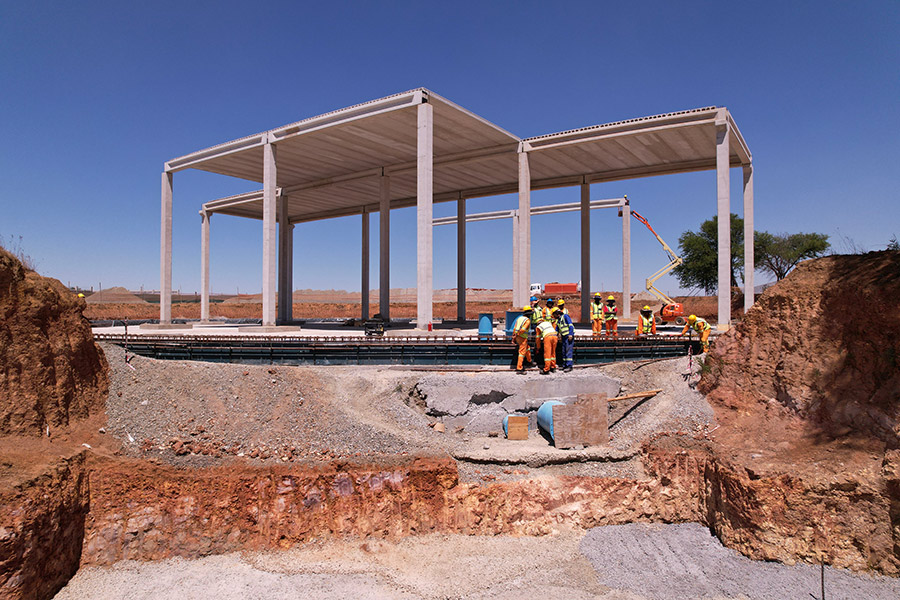
Yet, this knowledge has been developed even further to significantly speed up the construction of water towers, with the first two in the country now under construction.
Corestruc has been at the forefront of this precast-concrete innovation drive in South Africa’s water infrastructure market.
The company first made its mark as a precast-concrete solutions provider by helping to fast-track the construction of the 50ML Krugersburg reservoir to supply additional water required to host FIFA Soccer World Cup matches in Polokwane. The company’s precast-concrete roof system enabled Yarena Civils to commit to an almost-impossible construction deadline.
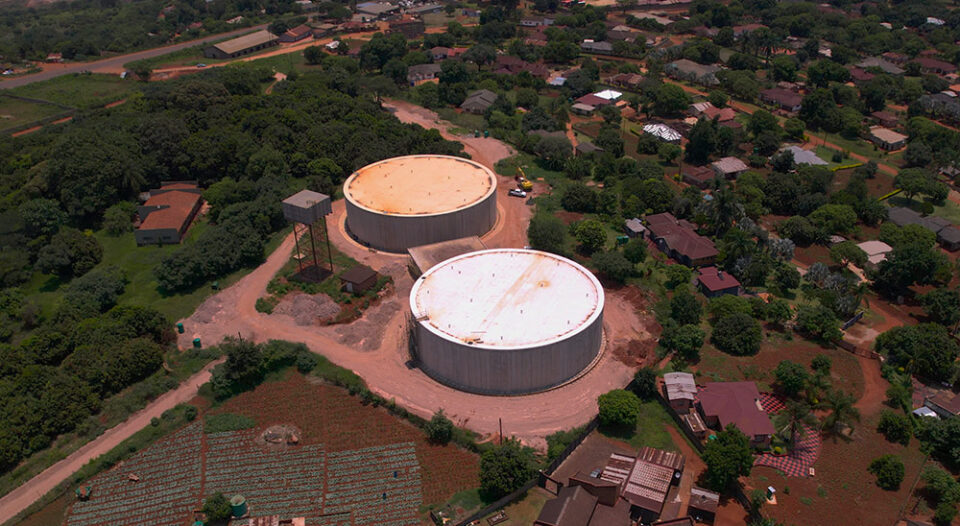
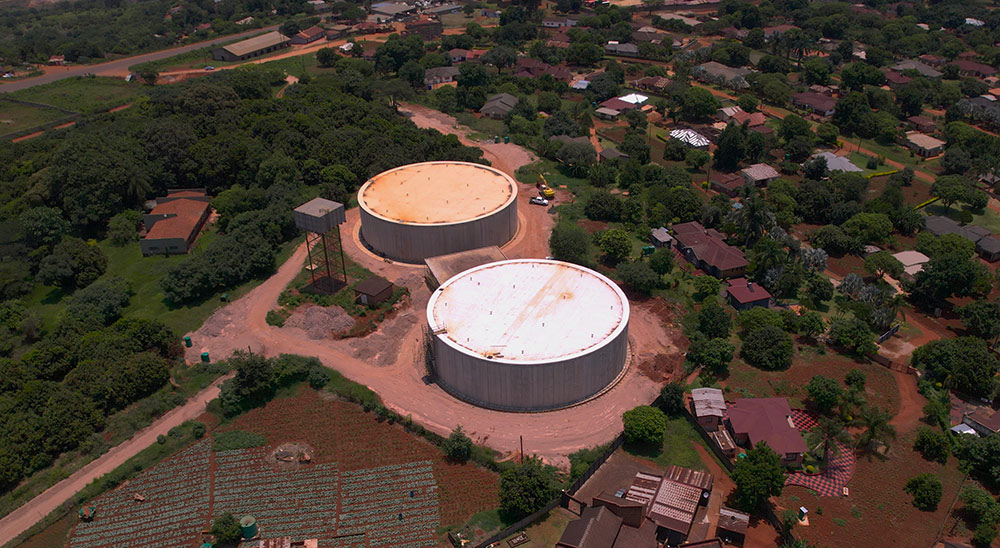
A few years later, Corestruc took its award-winning complete prefabricated reservoir system to market. It is now a tried-and-tested method for the construction of reservoirs ranging in size from 10ML to 60ML. Notably, Bundu command reservoir, one of the first precast-concrete reservoirs to be built in the country, received a 100% scoring in the latest Department of Water & Sanitation Blue Drop Report for its performance thus far. Following about five intense years of research and development, almost always a requirement for new precast-concrete systems, Corestruc has taken its innovative precast-concrete water towers to market, again pushing the boundaries of the possibilities of concrete prefabrication.
Already, Corestruc has helped to fast-track the construction of about 500ML of water-storage capacity, with many more projects already underway. This includes an open-top water-retaining tank with a wall height of 8,5m and total diameter of 41,71m for one of the country’s leading miners of platinum-group metals.
Certainly, it is the speed at which these precast-concrete structures can be built that make them ideally suited to building both municipal and industrial water infrastructure. For example, Corestruc can complete the construction of a 10ML reservoir and 30ML reservoir in four and six months, respectively. Prefabrication may not always be much faster than traditional in-situ concrete construction. However, in these instances, precast concrete was selected because it facilitates a sound project start. This is considering that the various precast-concrete elements that constitute the entire structure or sizeable portion thereof are already being manufactured during the earthworks, site terracing and construction of the foundations.
Willie de Jager, Managing Director of Corestruc, notes other benefits of concrete prefabrication that makes it so suited to constructing water infrastructure, not least of which are the high quality and durability of the final precast-concrete structure.
“The various precast-concrete elements that are integrated on site to complete the final structure are manufactured in controlled factory environments, ensuring consistent quality and reliability. The known durability traits of concrete are further enhanced with the use of high-strength concrete mixes; reinforcing or prestressed strand cover; and pre-tensioning,” De Jager says.
Then there are the significant construction cost savings that concrete prefabrication provides client bodies, engineering teams and principal contractors. This includes significant savings in construction material costs due to the use of high-strength concrete mixes and post-tensioning. For example, a precast-concrete reservoir is up to 40% lighter than one that has been built using conventional cast-in-place methods.
There is also a notable reduction in variation orders on precast-concrete projects. As he explains, the success of typical concrete prefabrication projects is founded on sound upfront planning as there is very little scope for variations during the construction phase. Engineering design and all drawings, as well as the logistics behind the coordination of services needs to be finalised before manufacture of the precast-concrete elements can start. This is with input from all relevant stakeholders, including the project engineer; mechanical consultant; main contractor; and precast-concrete specialist.
Moreover, prefabrication ensures a very high-quality final build at competitive rates. Taking all of these factors into consideration, the reservoirs that Corestruc has built have provided notable between 10% and 30% savings in construction costs.
Then, there are the significant savings in operating costs that these robust water-retaining structures provide municipalities over their 100-year design life.
However, clients and their engineering teams also know that a typical Corestruc project is very well managed. This is considering the extensive upfront planning that goes into these projects, while most of the complexity of the project is also handled by the prefabricator. The company is responsible for the manufacture of the precast-concrete elements; their efficient transportation to site; and integration using specialised rigging equipment. These, combined with Corestruc’s in-house design capabilities, enable the company to provide a comprehensive precast-concrete solution. This while exercising total control over each individual component of the precast value chain that plays a such a critical role in ensuring a successful outcome. There cannot be a single weak link from design of the precast-concrete structure to integration of precast-concrete elements.
Of course, with manufacture of the elements undertaken in a controlled factory environment and then integrated by expert riggers, precast-concrete projects are also safer – if undertaken by an expert according to strict health and safety protocol.
Of increasing importance to municipalities is the role that precast-concrete plays in constructing infrastructure with a smaller embodied carbon footprint.
Accurate manufacture facilitates the optimal use of materials, reducing waste. Moreover, prefabrication facilitates the use of more efficient design of concrete element shapes. These would be too costly or complicated to execute with cast-in-place construction methods.
To remain competitive, precast-concrete factories must also use energy and water efficiently. In these ways, they further reduce the carbon footprint of the concrete elements that are integrated on site.
Furthermore, by building more robust structures that require minimal maintenance, less construction materials are used to upkeep the structure over its long useable life.
Despite the immense progress South Africa has played in harnessing precast-concrete technology to build top-notch water, De Jager says that prefabrication is still in its infancy in the country.
“Just about everything built in other countries of the world is prefabricated because it is more efficient and cost-effective to construct quality infrastructure in this manner. As a country, we are still undergoing a very steep learning curve, in terms of the design and application of the technology. As our water crisis deepens, we will have no other choice to find more innovative ways of accelerating the construction of high-quality infrastructure in a cost-effective manner,” he concludes.
11 Comments
Do you agree with the perspective or information presented? Why or why not?
ivermectin rosacea clinical data
ivermectin rosacea clinical data
ivermectin strongyloides expert review
ivermectin strongyloides expert review
minoxidil foundational guide
minoxidil foundational guide
vardenafil vs viagra
vardenafil vs viagra
Duration and Metabolism Information
Duration and Metabolism Information
Delayed Sildenafil Onset
Delayed Sildenafil Onset
Sildenafil vs vardenafil overview
Sildenafil vs vardenafil overview
Sildenafil vs Avanafil PK/PD Overview
Sildenafil vs Avanafil PK/PD Overview
conditions sildenafil can be prescribed for
conditions sildenafil can be prescribed for
guide to sildenafil vs tadalafil
guide to sildenafil vs tadalafil